
Planting Our First Wine Cap Mushroom Bed
We've been wanting to try growing mushrooms on the farm for a while now, and this week we finally got a wine cap bed in the ground. Wine caps (Stropharia rugosoannulata) are one of the easiest mushrooms to grow outdoors, and they thrive on the kind of woody, organic material we have plenty of around here.
Building the Bed
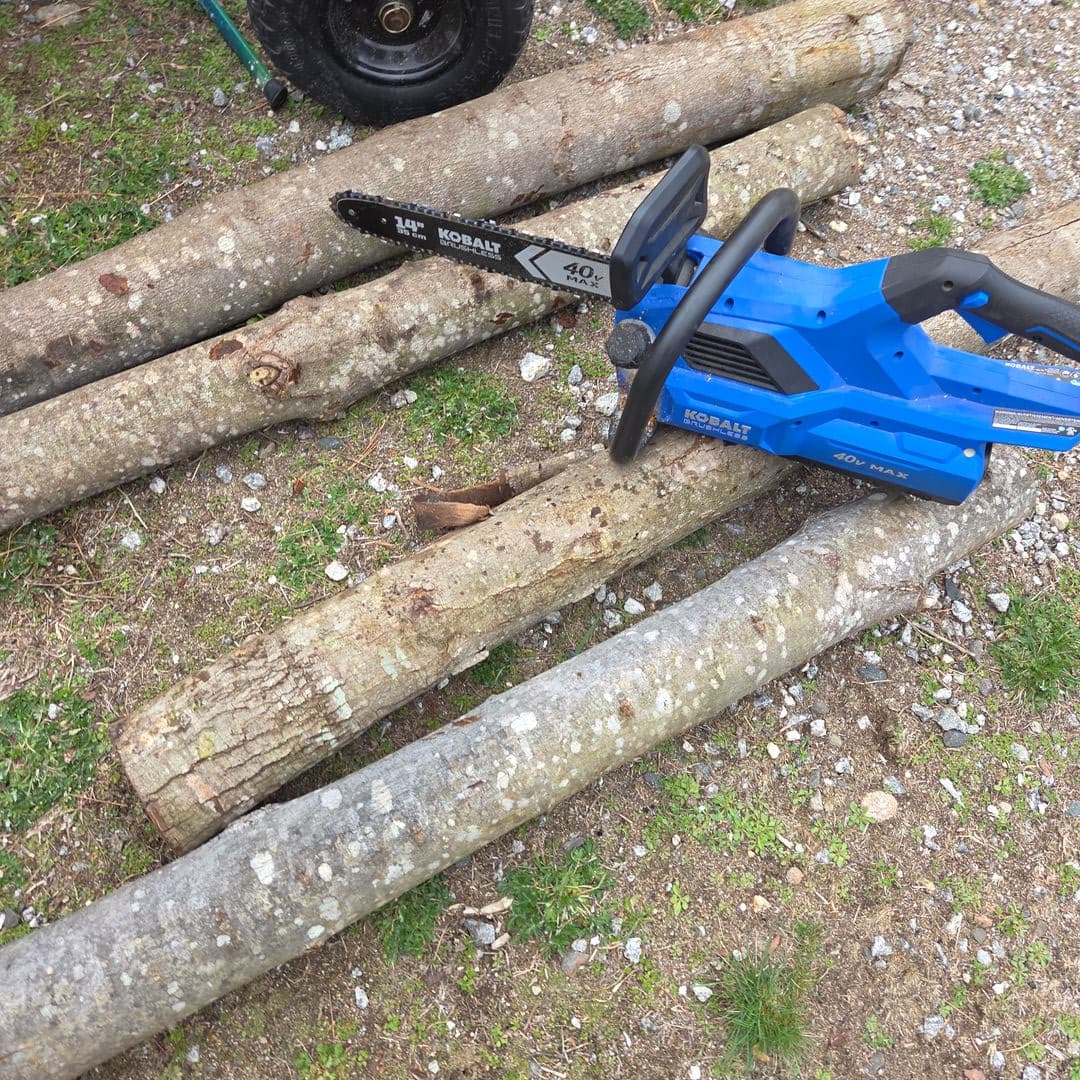
The first step was cutting logs to frame the bed. We had a pile of trees that were taken down earlier to clear space for the farm stand, so we bucked those into roughly four-foot lengths with the chainsaw. Four logs gave us a nice square frame, about sixteen square feet, which is a good starting size for a first mushroom bed.
We set the logs right on the ground in a shady spot at the edge of the woods. Wine caps like shade and moisture, so tucking the bed under the tree line felt like a natural fit.
Laying the Straw and Spawn
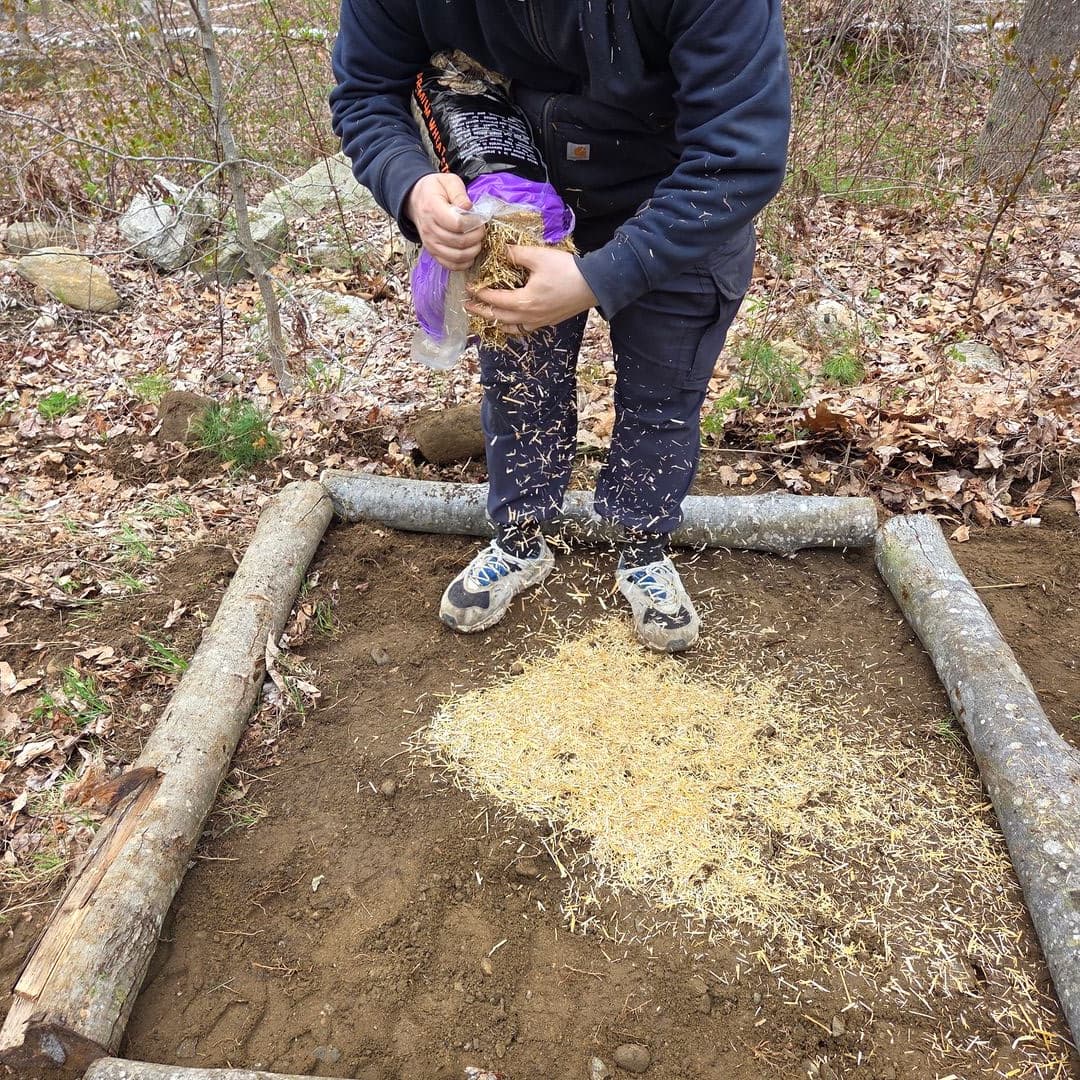
Once the frame was set, we laid down a layer of straw inside the bed. This gives the mycelium a carbon-rich substrate to colonize and helps hold moisture around the spawn.
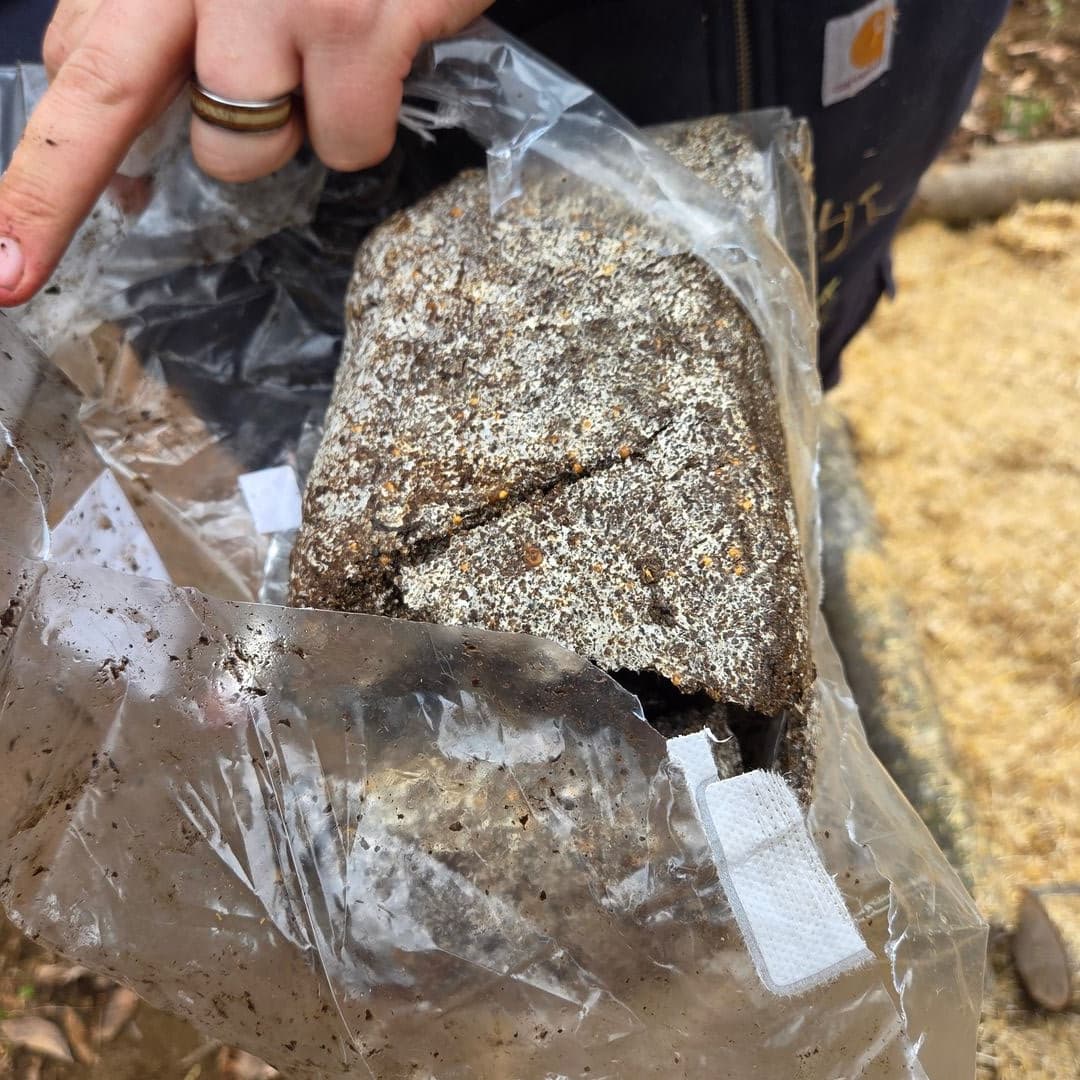
Then came the fun part. We broke open the bag of wine cap spawn and spread it across the straw layer. The spawn was well-colonized, with a thick web of white mycelium running all through the grain. You could tell it was healthy and ready to go.
Covering Up
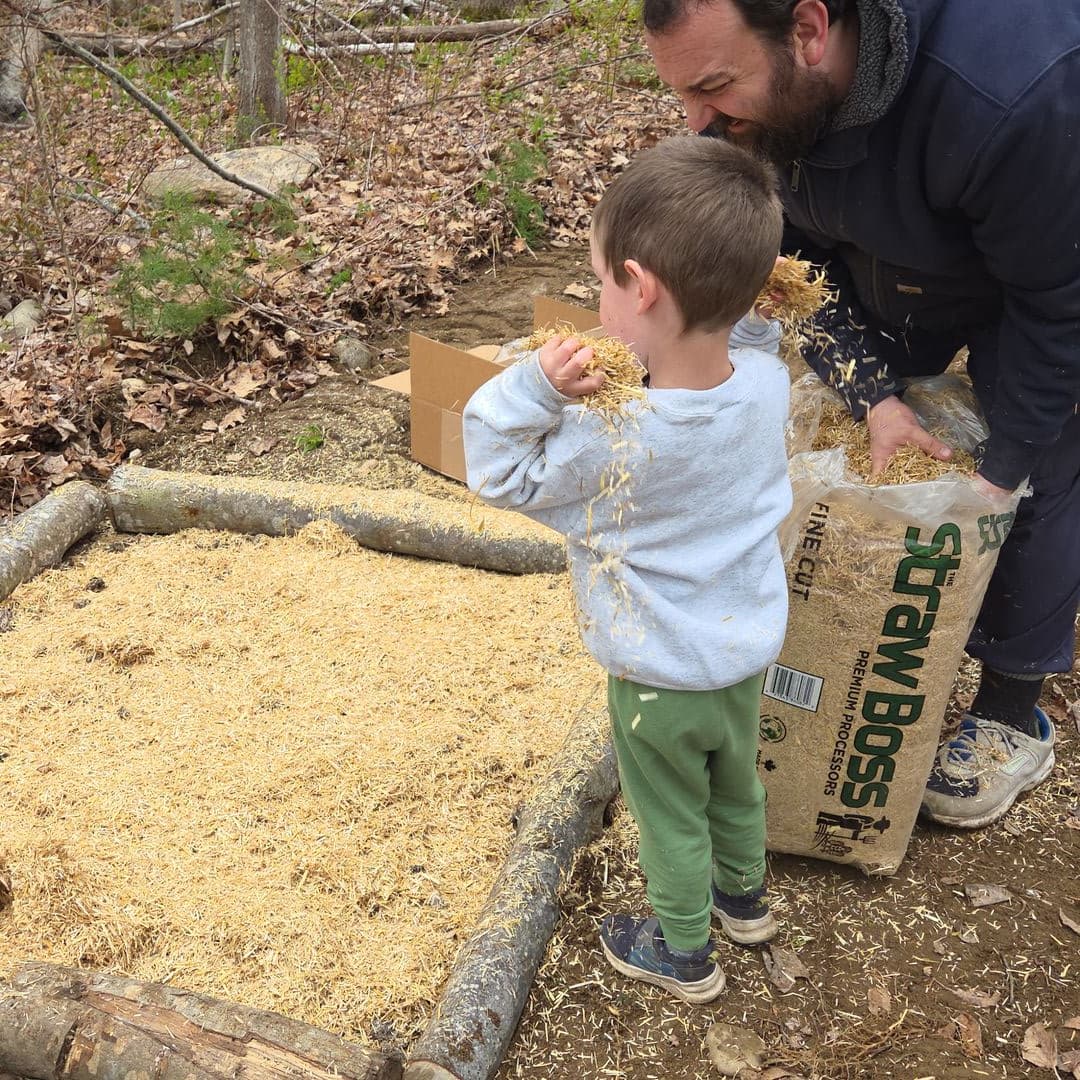
Our oldest jumped in to help cover the spawn with another layer of straw. He's always eager to get his hands in whatever project is happening outside, and spreading straw is right in his wheelhouse. We packed it down lightly to keep everything in contact and hold in moisture.
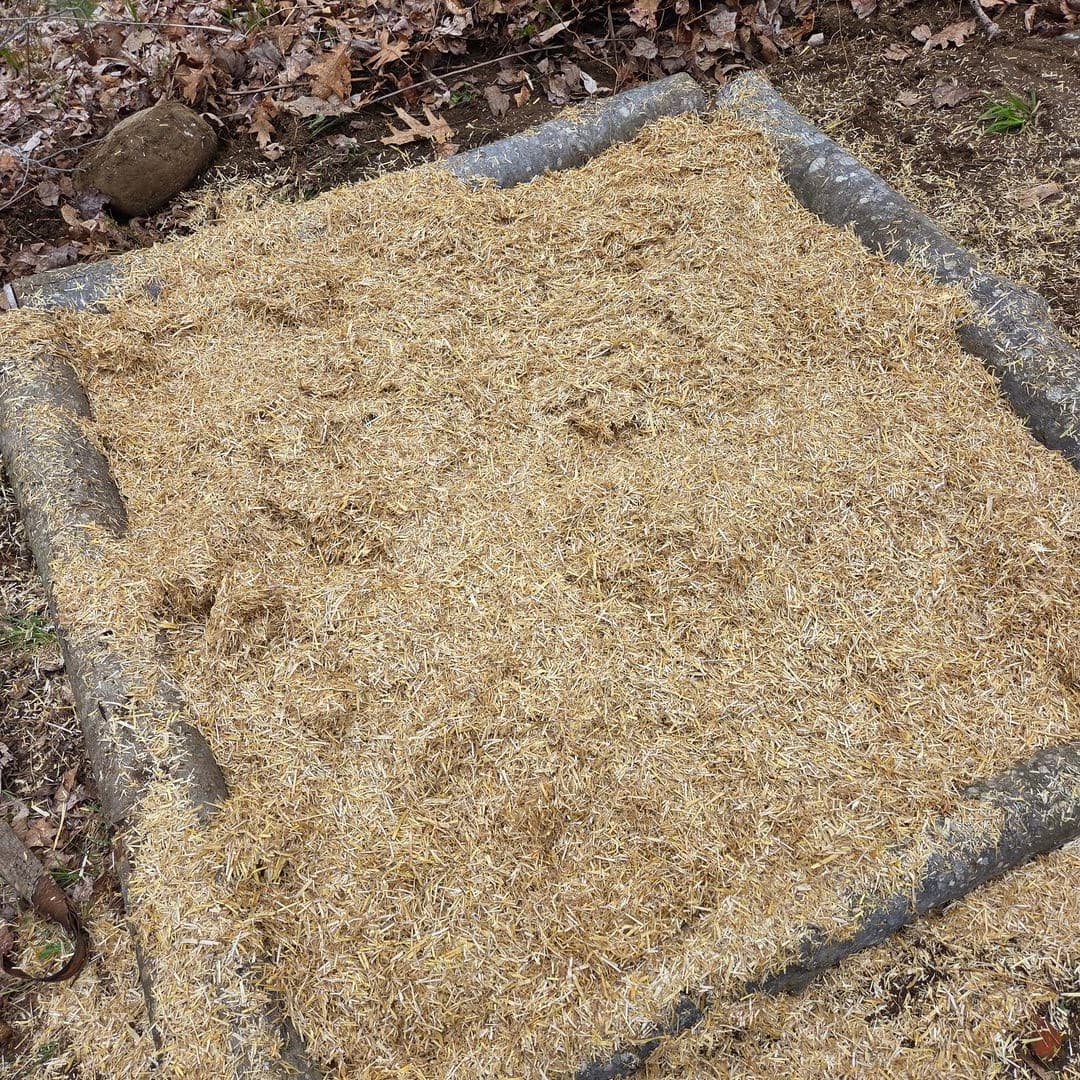
After the straw was on, we gave the whole bed a good soaking with the hose. Wine caps need consistent moisture to colonize, so we'll be keeping an eye on it and watering as needed, especially during dry stretches.
What's Next
The bed still needs a top layer of fresh wood chips and sawdust, which will give the mycelium even more to feed on and help keep things moist underneath. We'll be adding that as soon as we get the wood chipper up and running. After that, it's mostly a waiting game. If all goes well, we should start seeing mushrooms by late summer or fall. We'll keep you posted.